What If Growth Started with Curiosity? A Spring Reflection on Blooming
Monday, March 2nd, 2026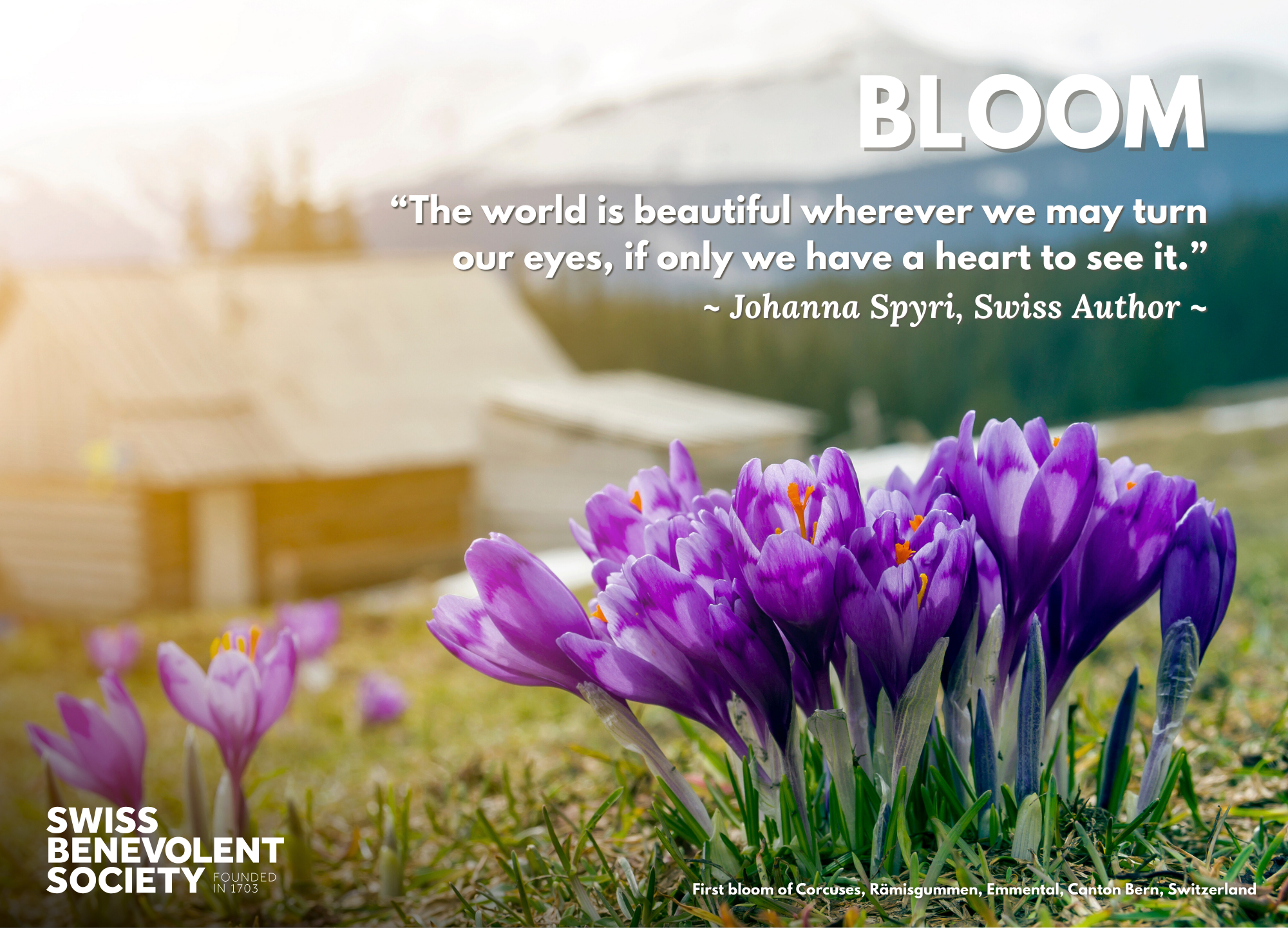
March – BLOOM
Growth begins with curiosity — allow small ideas to take root and give yourself permission to play, explore, and imagine.
March does not usually arrive with dramatic change. More often, it feels like a quiet loosening. Coats are still worn, but perhaps unzipped. The light lingers a little longer in the late afternoon. Someone suggests sitting by the window instead of switching on another lamp.
Nothing has transformed overnight, yet something has shifted.
Blooming rarely begins with visible colour. It begins with attention — and very often with curiosity.
The Moment Before Something Grows
The quote accompanying our March calendar comes from Swiss author Johanna Spyri, whose writing in Heidi continues to resonate far beyond childhood:
“The world is beautiful wherever we may turn our eyes, if only we have a heart to see it.”
– Johanna Spyri, Swiss Author –
Spyri’s stories are filled with landscape and movement — children climbing hills, watching goats, noticing clouds. There is a quiet invitation in her writing to look again at what might otherwise feel ordinary. Curiosity works in much the same way.
It often begins as something small. A thought while walking home. A fleeting idea about learning a new skill. A desire to rearrange a room, start sketching again, revisit a language not spoken for years.
Most of us dismiss these impulses quickly. We tell ourselves we are too busy, too old, too settled, too unsure. Yet blooming does not start with confidence. It starts with interest. You may recognise the feeling. Perhaps there was a moment recently when you lingered over an article longer than intended. Or found yourself watching how the light changes across a park you pass daily without noticing. Or considered reaching out to someone, not because you had to, but because you were curious how they were really doing. These are not dramatic shifts. They are seeds.
Curiosity in Everyday Life
For students and working professionals, curiosity can be crowded out by deadlines and expectations. Growth becomes associated with achievement — passing exams, securing roles, completing projects. Yet the most meaningful development often begins in quieter ways: asking a different question in a meeting, exploring a topic beyond the syllabus, allowing a new interest to coexist alongside practical responsibilities.
For families, curiosity may appear in unexpected places — a child asking why the sky looks different in spring, a shared experiment in the kitchen that does not quite work, a conversation that drifts beyond routine logistics. These moments, although small, cultivate imagination and connection.
For those in later life stages or navigating transition, curiosity may feel less urgent but no less important. It might take the shape of revisiting an old hobby, joining a local group, learning how to use a new piece of technology, or simply allowing a different daily rhythm to emerge without judgement.
Growth does not belong to one season of life. It simply changes tone.
Giving Ourselves Permission
One of the quiet obstacles to blooming is the belief that everything must have a clear outcome. We hesitate to begin unless we know where something will lead. Yet when children play, they do not ask whether the game will be productive. They explore because it feels natural. What if blooming in adulthood required something similar?
Perhaps it looks like trying a new walking route without checking the map first. Or reading a book outside your usual interests. Or setting aside ten minutes to write, draw, or reflect, even if no one else sees the result. Not every small idea needs to become a project. Not every interest must justify itself. Some ideas simply need space. Often, the difference between stagnation and growth is not capability — it is permission.
The Role of Attention – Gentle Practices for March
Curiosity thrives when attention slows. You may have noticed how different the same street can look depending on your pace. When rushing, it becomes background. When walking slowly, details emerge — a blossom against brickwork, a familiar face in a new light, a sound that had gone unnoticed before.

The March prompt captures this beautifully:
“Take five minutes daily to notice the beauty hiding in ordinary things.”
Not as a challenge.
Not as an obligation.
Simply as an invitation.
Those five minutes might be spent watching clouds move, listening fully in conversation, or observing how your own thoughts shift when you allow them to settle. In that noticing, imagination begins to stir. Curiosity is rarely loud. It is attentive.
Here are a few simple ways to support connection this month:
- Choose one small area to nurture.
Instead of attempting broad reinvention, focus your attention on one habit, one relationship, or one quiet interest. Give it consistent care and observe how it develops over time. - Recognise steady effort.
At the end of the week, reflect not on what was impressive, but on what endured. Where did you remain engaged? Where did you continue, even imperfectly? Growth often hides in what we repeat rather than what we announce. - Step outside with awareness.
Even a short pause in natural light can recalibrate perspective. Walk without distraction, notice emerging colour, observe the change in air and sound. Attention sharpens in stillness. - Respect the rhythm of season.
Energy fluctuates. Motivation rises and falls. Blooming cannot be rushed simply because the calendar has turned. It responds to care, not pressure.
Growth becomes sustainable when it is allowed to unfold.
📚 This Month’s Good Reads
This month’s reading suggestions reflect different dimensions of growth — self-awareness, renewal, and rootedness.
THE MOUNTAIN IS YOU – BRIANNA WIEST
A contemporary exploration of self-sabotage, emotional intelligence, and the internal patterns that often shape our external challenges. Wiest invites readers to examine the ways we may unconsciously resist the very growth we desire.
Why it fits March: Blooming sometimes requires recognising the barriers within ourselves and approaching them with curiosity rather than judgement.
Best for: Students, professionals, and anyone committed to meaningful personal development.
🔗 https://www.goodreads.com/the-mountain-is-you
WINTERING – KATHERINE MAY
A thoughtful account of life’s quieter seasons and how retreat often prepares the ground for renewal.
Why it fits March: It reminds us that what appears dormant may in fact be preparing for growth.
Best for: Families, carers, and those navigating change.
🔗 https://katherine-may.co.uk/wintering
HEIDI – JOHANNA SPYRI
More than a children’s classic, Heidi remains a story about belonging, observation, and the restorative influence of landscape.
Why it fits March: It reflects the connection between environment, curiosity, and wellbeing — a reminder that blooming is both internal and relational.
Best for: All of us! This is not just a children’s book but a nostalgic way to reconnect with our Swiss culture and feed our Heimweh.
🔗 https://www.penguin.co.uk/books/59641/heidi-by-spyri-johanna
📖 Prefer to borrow instead of buy?
Many of these books are available for free through local libraries. If you prefer to borrow rather than buy, you can search for nearby copies via WorldCat at local libraries via:
👉 https://www.worldcat.org
Closing Reflection
Blooming does not begin with certainty. It begins with attention, with interest, with the willingness to explore something small without knowing where it will lead.
March offers an opportunity not for dramatic change, but for gentle curiosity — to follow an idea, to observe more closely, and to trust that growth is already underway.
Sometimes, all it requires is permission.
Be patient with your unfolding.
And carry on.
Join Our 2026 SBS Year of Steady Progress
This journey continues through our monthly blog, where each theme will come to life with practical insights, reflections, and coaching tools to help you stay steady through the year.
Accessing the Calendar
To ensure everyone in our community can take part, we have made the full PDF version of the SBS 2026 Wall Calendar available to download for free on our website.
If you would prefer a hardcopy, you are very welcome to contact our office. We will be happy to post one to you. We currently have a limited number of printed copies remaining, available on a first-come, first-served basis; in return, we would gratefully appreciate a Donation of any amount. As always, 100% of proceeds go directly back into the SBS Welfare Fund, supporting Swiss nationals in the UK who need us most.
👉 Download the PDF: SBS 2026 Calendar A4
👉 Request a hardcopy: info@swissbenevolent.org.uk
READ OUR OTHER BLOGS HERE:
- The Art of Rebalancing Life: Navigating Change Through Small Everyday Choices
- Welcoming Our New Welfare Officer, Lily
- What If Growth Started with Curiosity? A Spring Reflection on Blooming
- Listening, Language, and the Quiet Work of Connection
- Renewal Begins with One Intentional Step
About the Swiss Benevolent Society
The Swiss Benevolent Society exists to support Swiss nationals in the UK through times of change, challenge, and transition. Our work is grounded in dignity, compassion, and the belief in self-reliance — offering practical help while empowering individuals and families to regain stability and confidence. If you or someone you know may need support, you can learn more about how we help and how to get in touch through our Welfare Office. If you share our values and would like to be part of our community, we welcome you to become a member and stay connected with our work. And if you are able, donations — of any size — help us continue providing vital assistance; every contribution goes directly back into our welfare programmes.
Stay Connected
Follow us on Facebook, Instagram or LinkedIn for monthly reflections, book highlights, and gentle wellbeing reminders.
Subscribe to our newsletter to receive each month’s theme directly in your inbox.
If you are able, donations help sustain our welfare work and ensure we can continue supporting Swiss nationals in the UK. Every contribution makes a difference.